
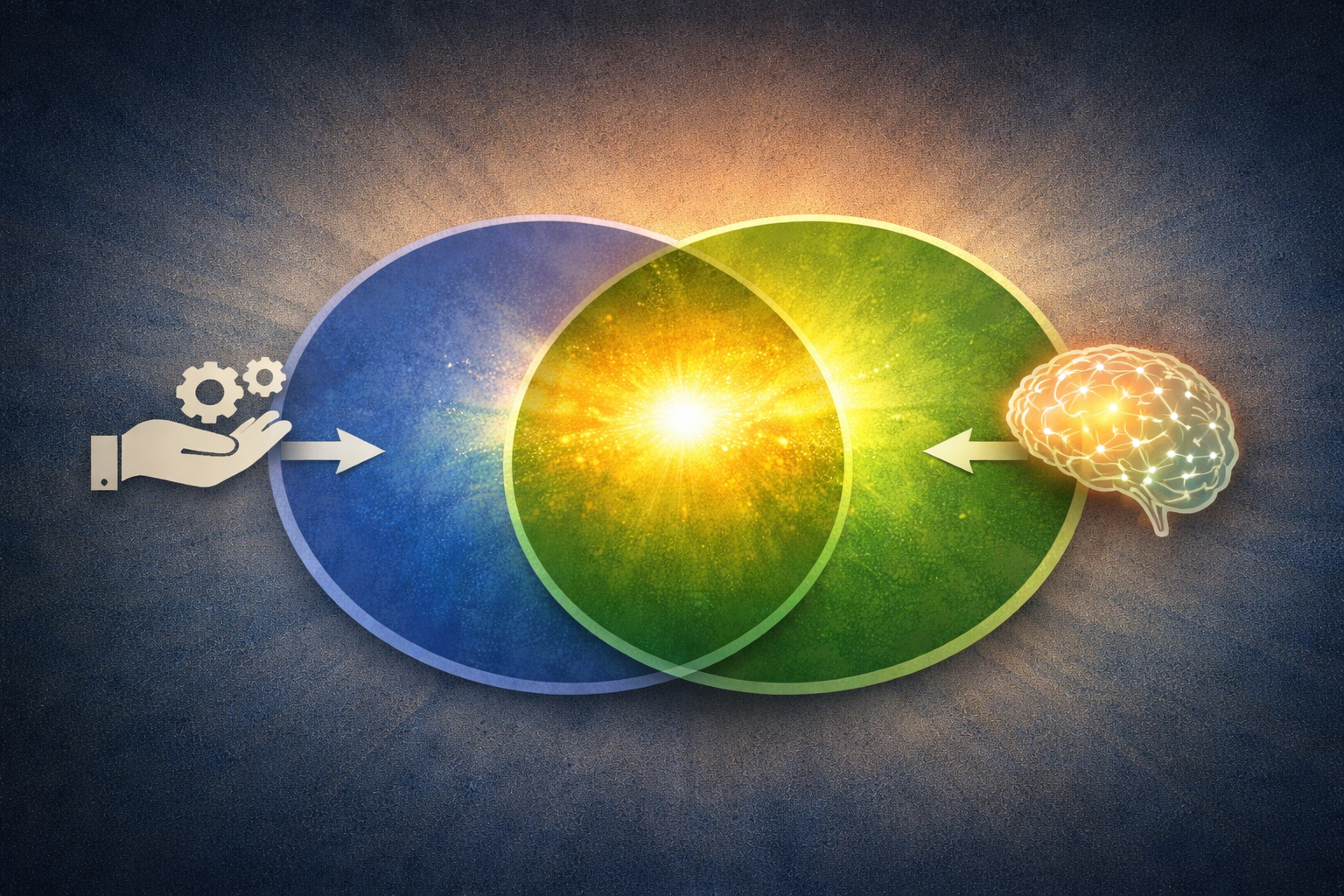
The more our spheres of concern and control overlap, the more agency we experience.
We are exposed to more information than at any other time in history. The news cycle, social media, TV,
blogs, and internet forums bring the wider world directly to our phones. This deluge of information
heightens anxiety, distorts our perception of danger, and erodes sustained attention. It also amplifies
social comparison and outrage, making people feel less grounded, less connected, and less in control. At
the same time, the way this information is delivered stimulates us, pulling us to continually engage and
seek more. This is the fundamental impact of a discordant relationship between our sphere of concern
and sphere of control.
Our sphere of concern includes everything we care about—the things we think about throughout our
day. Our sphere of control, by contrast, includes what we can directly decide or change: our actions,
choices, and responses. This typically centers on our home life, the lives of people we live with or near,
and how we spend our time.
Anxiety's function is to help us anticipate and manage future threats. When our spheres of concern and
control are out of sync, anxiety warns us about things we care about but cannot directly control—other
people's behavior, world events, future outcomes—leaving us with limited agency. Sometimes we
respond by displacing our anxieties onto things we can control or the people in our lives, sowing
unhappiness. We might become hyperalert to prejudice and assume the worst in others, worry
excessively about safety instead of having new experiences, or engage in virtue signaling to manage our
discomfort with problems we feel powerless to solve.
The more our spheres of concern and control overlap, the more agency we experience. Shifting our
sphere of concern is typically easier than expanding our sphere of control. The more aware we are of
the sources of our anxieties, the greater freedom we have in choosing what we expose ourselves to.
In practice, this might mean limiting social media and news consumption, reducing screen time, and
instead engaging in community events or spending quality time with family. It might mean being
authentic to ourselves, building local community, and exploring hobbies rather than seeking validation
from an anonymous horde. When we align what we care about with what we can actually influence,
anxiety becomes less chronic background noise and more a useful signal—helping us protect what truly
matters.